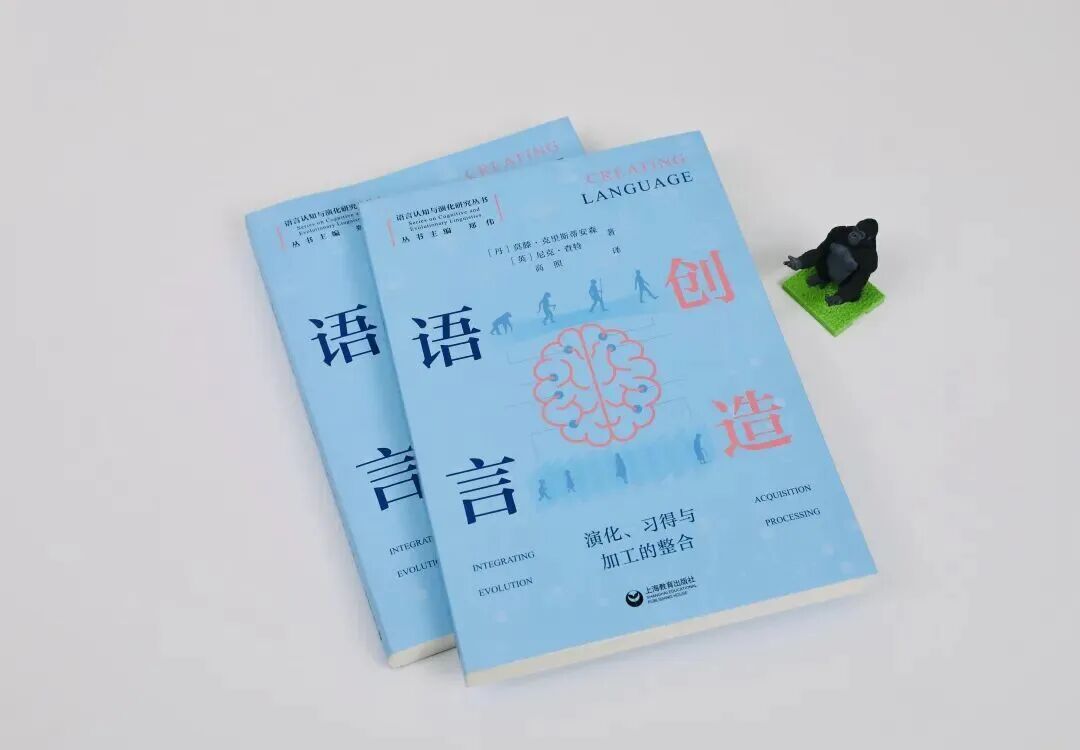
Recently, the latest translated work Creating Language: The Integration of Evolution, Acquisition, and Processing (original authors: Morten H. Christiansen and Nick Chater) by Professor Gao Zhao, a dual-affiliated professor and doctoral supervisor at AI-HSS, has officially been released to readers. As a seminal work in the field of language evolution, this book not only presents a groundbreaking challenge to the long-dominant "language gene" theory in academia but also offers a novel interdisciplinary perspective for understanding the intricate relationship between human cognition and language.
Debunking the "Nativism" Myth: Revealing the Threefold Dimensions of Language Creation
Is human language an innate "instinct" embedded in our genes, or is it a product of acquired learning and cultural evolution? For a long time, Chomsky's theory of "Universal Grammar" (UG) has posited that humans are born with a specific mental structure for language. However, Creating Language boldly questions this view. Through rigorous argumentation, the two authors of the book contend that language is not a static genetic endowment but rather a gradual formation through improvisational interaction and creation over the long course of human history. In his translation, Professor Gao Zhao accurately conveys the authors' core argument: to unravel the mystery of language, it must be examined within the three nested timescales of "biological evolution, cultural evolution, and individual learning."
Integrating Fragmented Disciplinary Perspectives: Addressing the "Nature vs. Nurture" Debate
Creating Language is not merely a theoretical work but also an effort to reintegrate the fragmented landscape of language science. The book explores how children transform childlike linguistic representations into adult models and delves into why different languages exhibit striking similarities in some aspects while diverging significantly in others. By incorporating evidence from computational modeling, psycholinguistics, and neuroscience, the book provides a compelling alternative explanation to the long-standing academic debate between "innate structure" and "acquired experience." Professor Gao's translation is characterized by its fluent language and logical rigor, transforming the original work's critical reflections on obscure concepts such as "recursion" and "generative grammar" into academic language accessible to Chinese readers. The publication of this book is seen as a bridge connecting genetics, cognitive science, and cultural studies, showcasing the grand vision that language science ought to embrace: a unified discipline no longer fragmented by theoretical barriers.
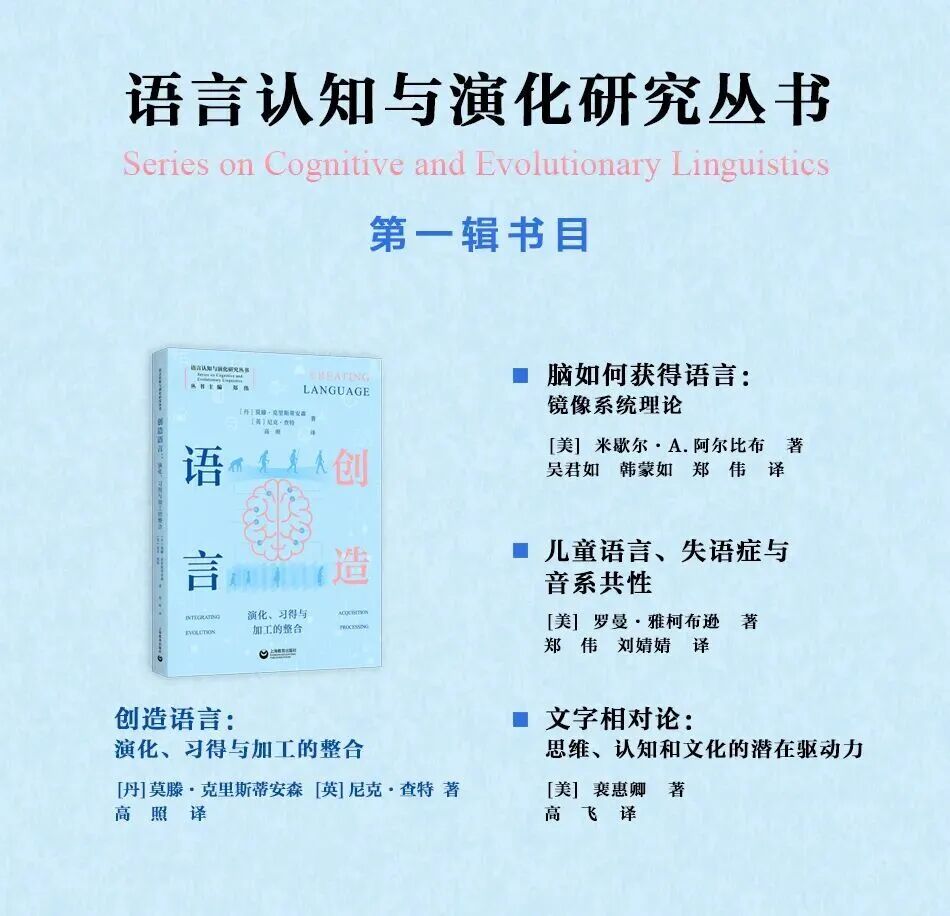
The release of Creating Language not only enriches the theoretical horizons of domestic linguistics but also offers an intellectual feast for researchers and students in related fields. It reminds us that language is not merely a tool for communication but a miracle continually "created" in every second of interaction, every individual's life cycle, and every generation's transmission. As the exclusive translator of this work, Professor Gao has long been dedicated to researching the biological foundations of language evolution, the integration of multimodal information in social contexts, and the cognitive neural mechanisms of abstract concepts in Chinese. This translation project represents a significant achievement for the Institute in promoting the localization and dissemination of cutting-edge international academic thought, further enhancing the academic influence of our university in the fields of language cognition and evolution.