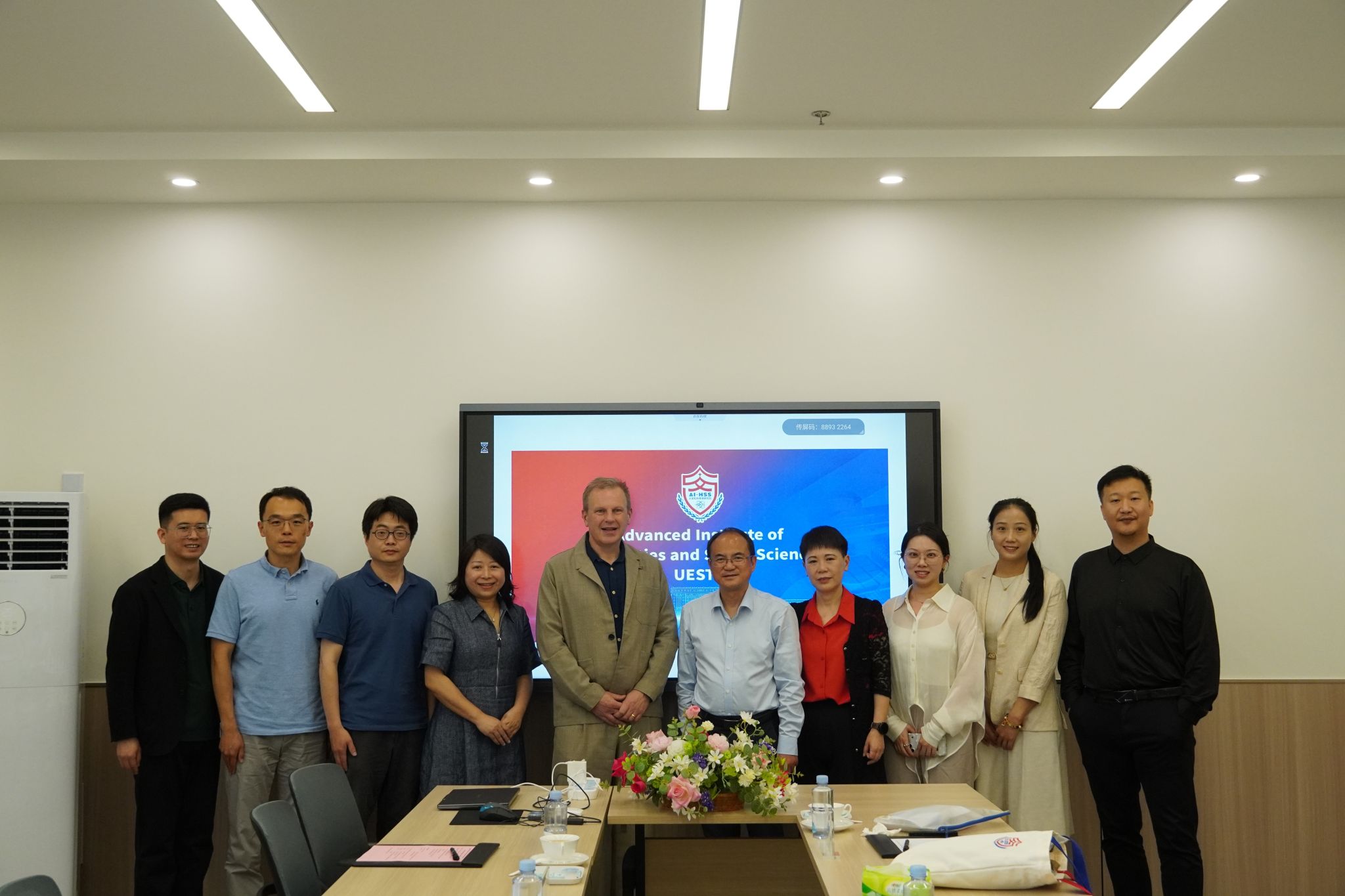
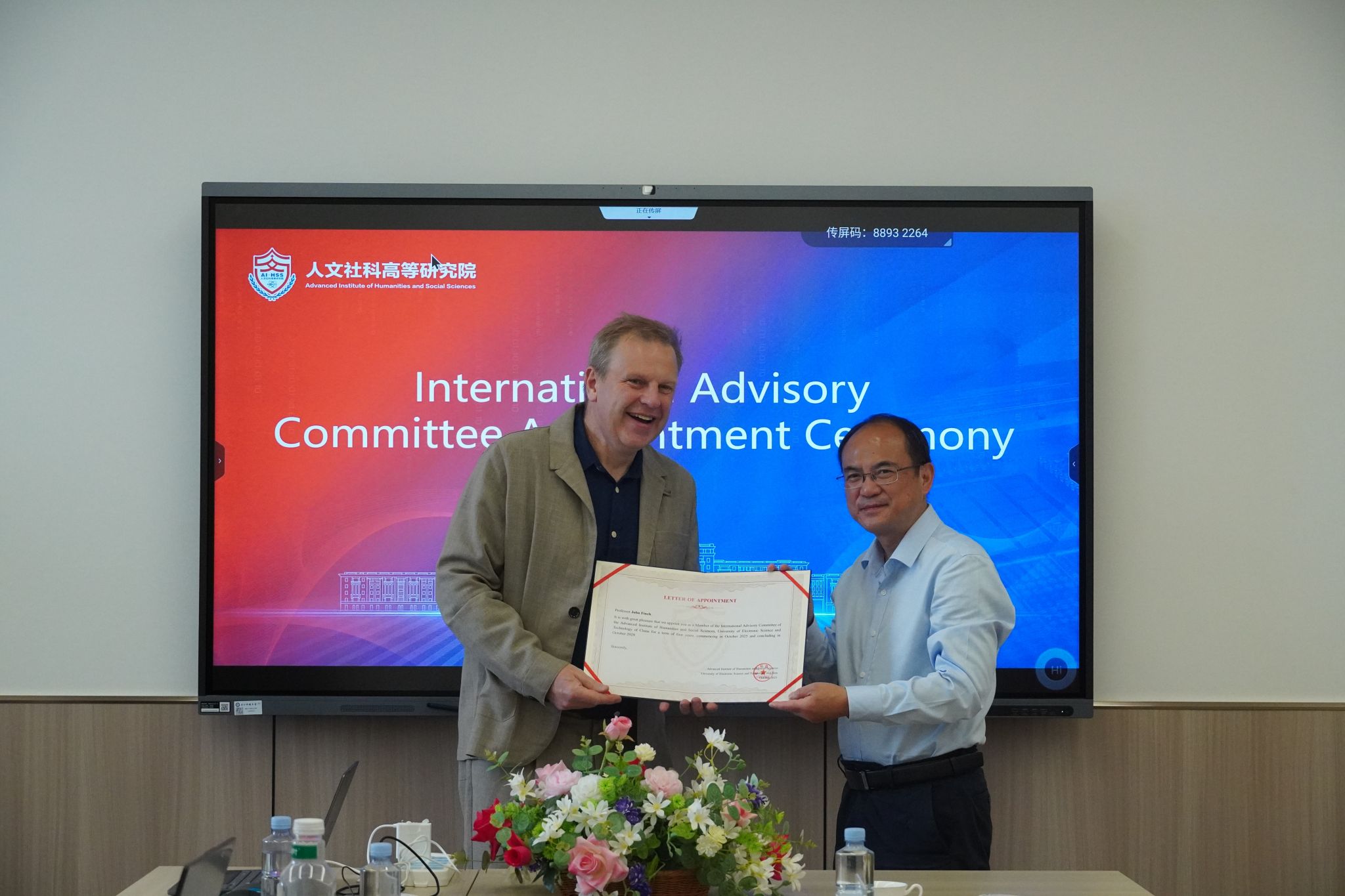
On May 21, Professor John Finch from the Adam Smith Business School, the University of Glasgow, paid an official visit to AI-HSS. He conducted in-depth exchanges and discussions with the institute’s leadership and faculty representatives on AI-HSS’s disciplinary development, collaborative research, talent cultivation and future developmental planning.
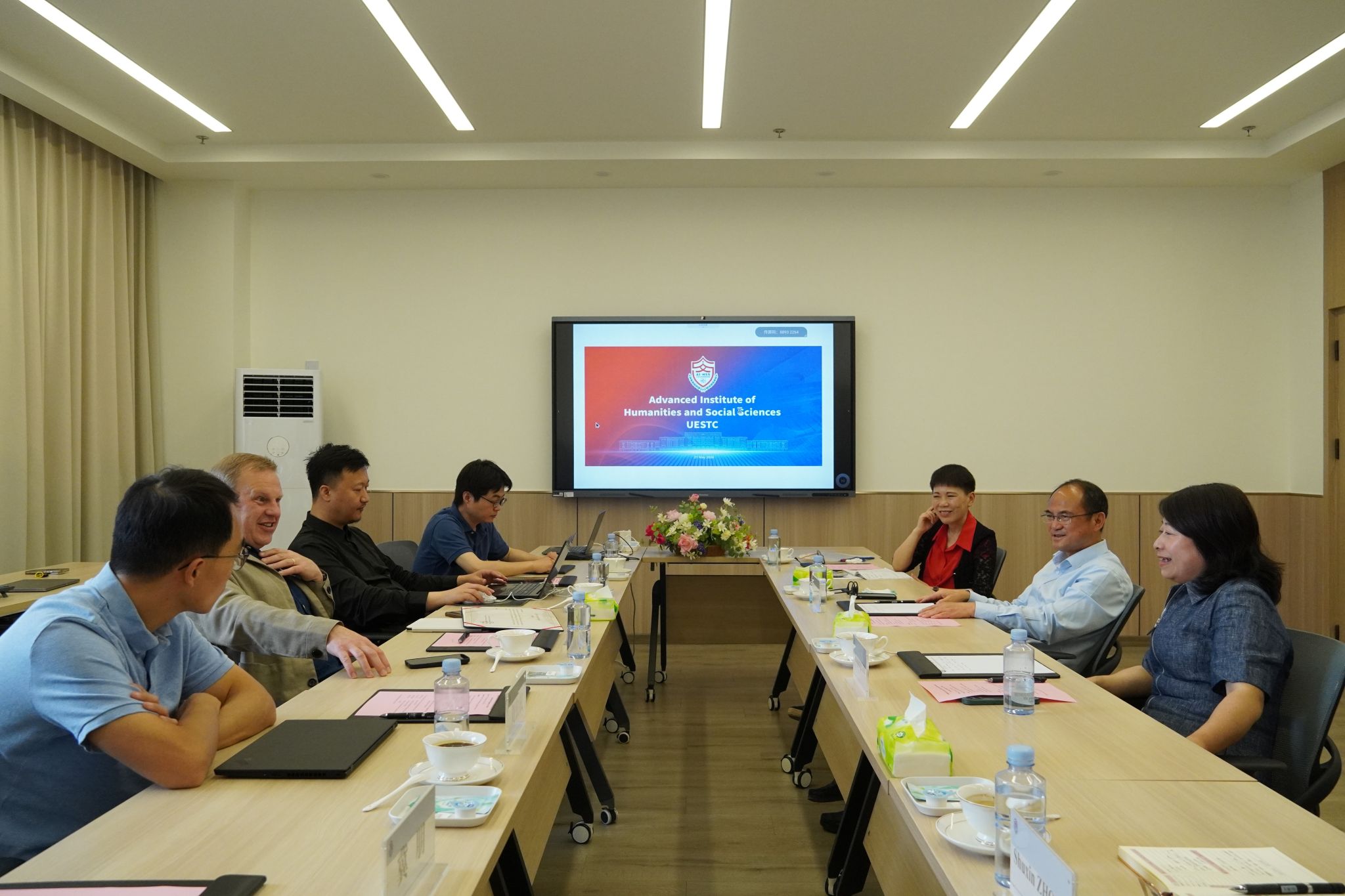
AI-HSS extended a sincere welcome to Professor Finch. Through an institutional video and thematic presentation, the institute elaborated on its founding background, disciplinary layout and core development priorities. Reviewing the operation and fruitful outcomes of existing collaborative programs between UESTC and the University of Glasgow, AI-HSS underscored its core mission of advancing in-depth integration of humanities, social sciences and cutting-edge technologies. The institute expressed its anticipation of further expanding bilateral cooperation with the University of Glasgow in joint student training and collaborative education, aiming to cultivate high-caliber interdisciplinary talents with global vision for both institutions.
Professor Finch thanked AI-HSS for the warm reception and spoke highly of AI-HSS’s innovative achievements in interdisciplinary integration and international education development. Both parties engaged in thorough discussions on key facets of cooperation, spanning undergraduate and postgraduate joint training program design, curriculum alignment, credit recognition, as well as faculty and student reciprocal visits. Preliminary consensus was reached to promote the implementation of substantive collaborative education projects in the next stage. Additionally, Professor Finch had intensive academic exchanges with young faculty members of AI-HSS, offering professional insights and practical suggestions on academic research orientations, international cooperation resources and career development paths for early-career scholars.
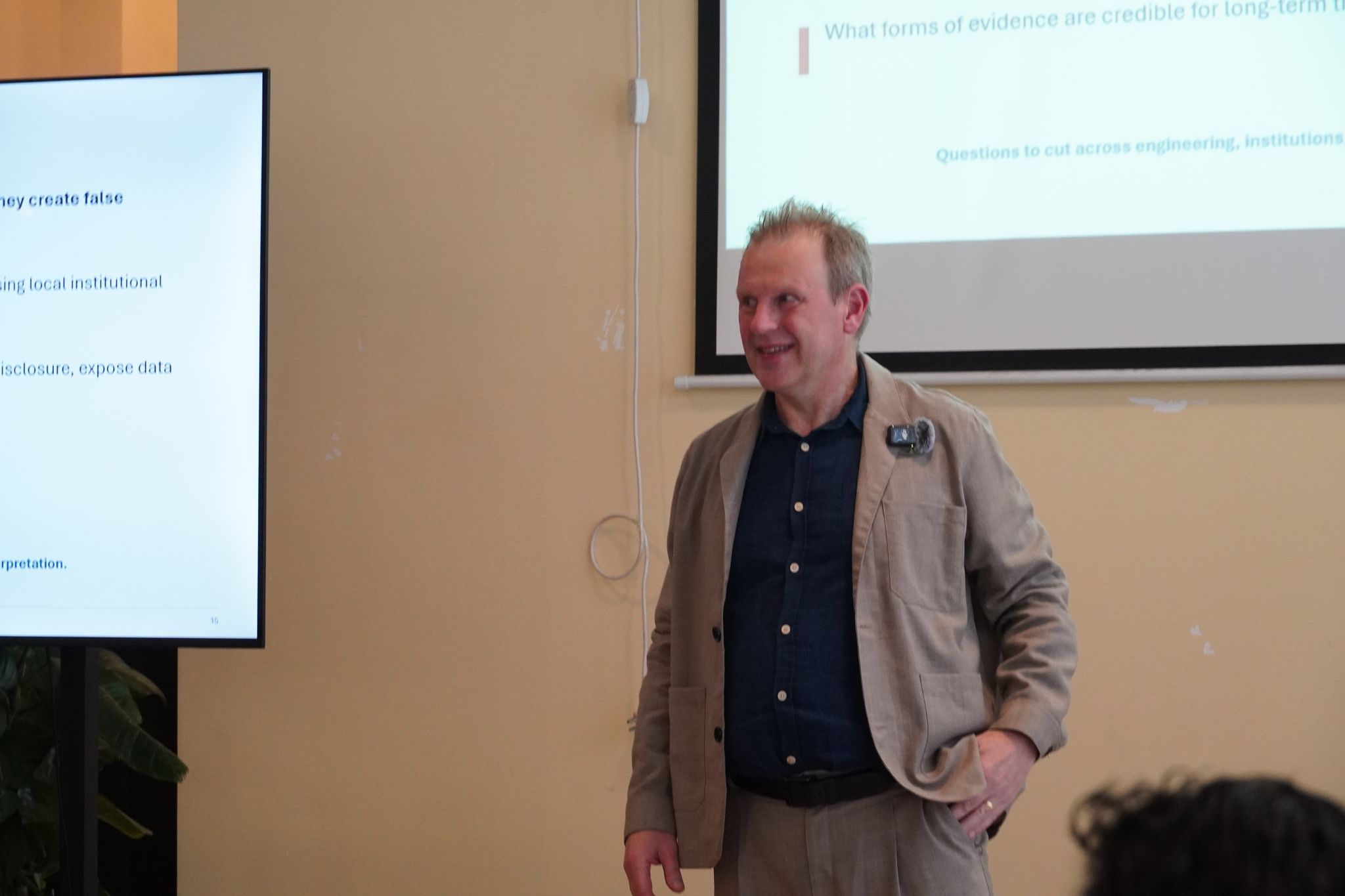
On the same day, Professor Finch delivered a keynote lecture at the 31st session of AI-HSS’s Humanities × Technology Thinkers’ Forum. Titled Making Risk Governable: ESG Disclosures, Risk Taxonomies and the Policy Lives of Sustainability Standards, the lecture attracted widespread academic attention.
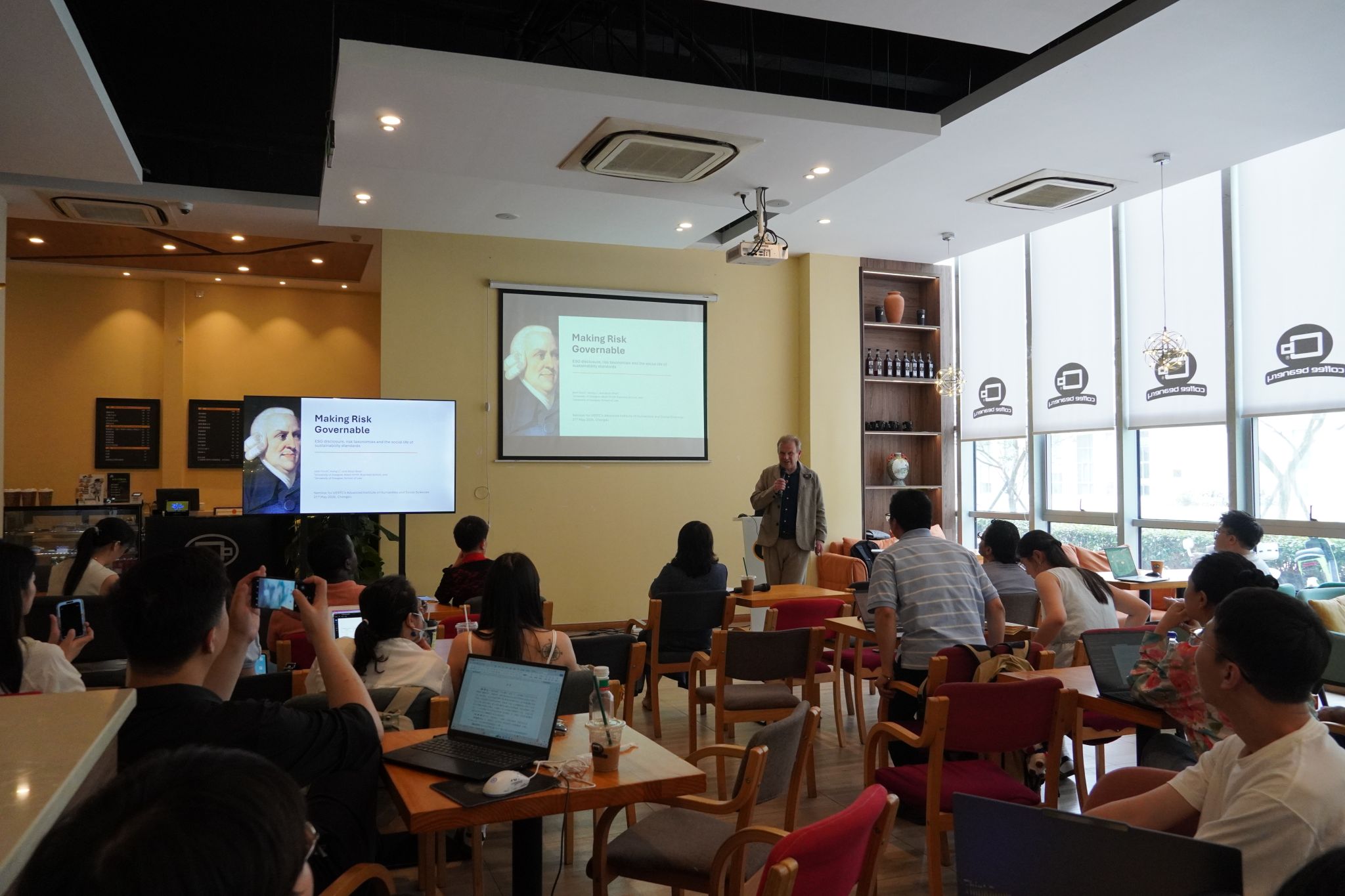
Integrating Adam Smith’s market economic theories and research practices from the UK Financial Regulation Lab, Professor Finch pointed out that risk taxonomies serve not only as technical analytical tools, but also as critical knowledge infrastructures to coordinate corporate operations, regulatory governance and social development. He stressed that the effectiveness of ESG disclosure hinges not on the quantity of disclosed data, but on organizations’ internal capacity to generate and validate relevant data. Currently, enterprises are increasingly mandated to disclose environmental risk information, yet mandatory requirements for practical transformative actions remain absent, making the transition from passive disclosure to active governance the core challenge of current sustainable development. Taking China’s practical engagement with ISSB standards as a typical case, Professor Finch discussed the local adaptation and contextualization of global sustainability disclosure frameworks. He concluded that risk taxonomies, as core boundary objects for interdisciplinary knowledge integration, are worthy of in-depth exploration by humanities and social science researchers.