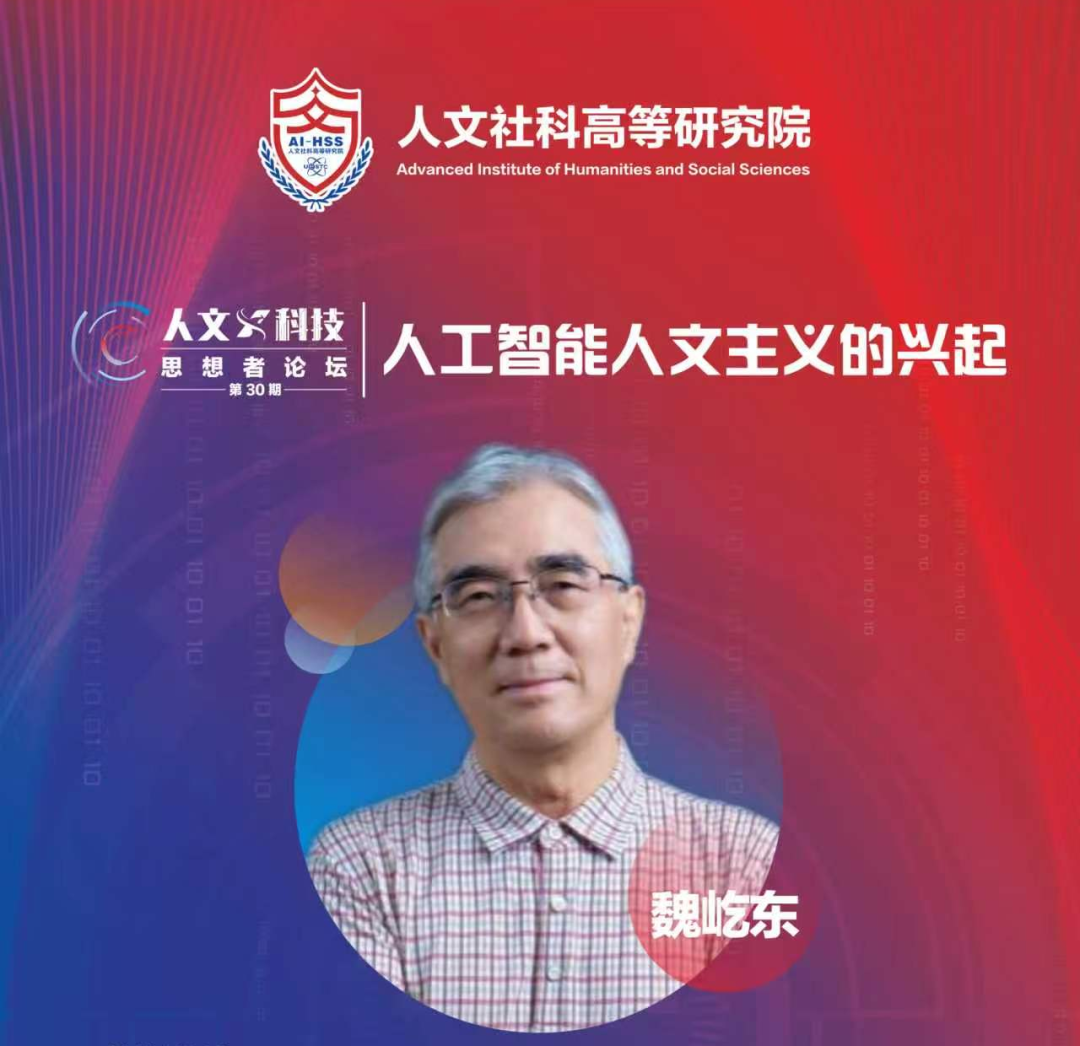
Keynote Speaker:
Wei Yidong is an academic leader at the Research Center for Philosophy of Science and Technology, a Key Research Base for Humanities and Social Sciences under the Ministry of Education of China, Shanxi University. He holds the title of Senior Professor (Level II) and Doctoral Supervisor at the School of Philosophy. He is an author selected for the National Philosophy and Social Sciences Achievement Library and Chief Expert for major national research projects in philosophy and social sciences. His long-term research focuses on the history of science, philosophy of science, cognitive philosophy, philosophy of artificial intelligence, as well as contextualist epistemology and methodology. He proposed the concept of philosophy of cognition and initiated the first International Conference on Philosophy of Cognition, establishing the training system and research team for cognitive philosophy at Shanxi University.
Based on cognitive philosophy and contextualism, he put forward and developed the concept of "adaptive representation", regarding it as a unified category governing both natural cognition and artificial cognition to explain the generation of consciousness and intelligence in the two systems. On this basis, he further constructed the Adaptive Representation Theory of AI Cognition.
Main Content:
The rapid development and widespread application of artificial intelligence, along with consequent ethical and legal challenges, have greatly prompted humanities disciplines, especially philosophy, to reflect on and remain vigilant against AI. As a potentially dangerous technology, artificial intelligence may cause irreversible harm to humanity without proper regulation.
Thus, it has become an imperative task for humanities to restrict the unregulated expansion of AI and turn it into a safe and reliable assistant for human beings. Humanism offers a rational and practical way to guide and regulate AI development. Its core lies in the humanistic transformation of artificial intelligence — namely, constructing "cultural artificial intelligence" and conditionally curbing pure "tech-oriented artificial intelligence".
Since the Renaissance, humanism has inherited fine traditions. Its core ideas — returning to human nature, people-orientation, advocating scientific rationality, and opposing backwardness and obscurantism — remain a beacon for human progress. These advanced ideas are inherently consistent with the profound people-oriented essence of fine traditional Chinese culture. Furthermore, the people-centered development philosophy in the practice of socialism with Chinese characteristics offers a vivid interpretation of the progressive values of humanity.
This demonstrates an evolutionary trajectory: from classical humanism against theocracy, to post-humanism against technological alienation, and further to post-human humanism against the blind worship of artificial intelligence.
Lecture Information:
Time: April 22, 2026 (Wednesday), 10:00
Location: Coffee Beanery
Organizer:
Advanced Institute of Humanities and Social Sciences (AI-HSS)
Sign-up QR Code: