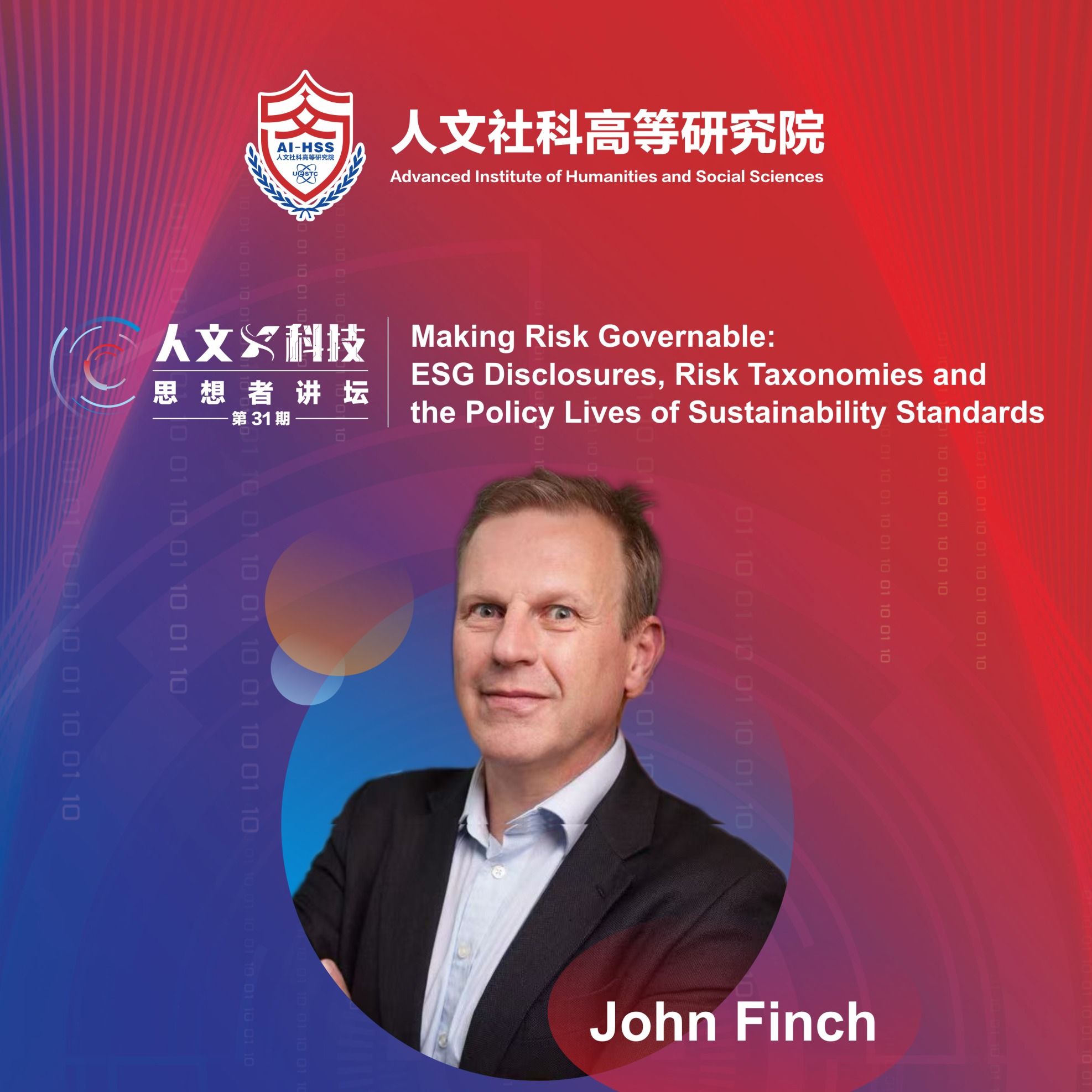
Keynote Speaker:
Professor John Finch, Professor of Marketing, University of Glasgow, Adam Smith Business School (john.finch@gloasgow.ac.uk)
John is Professor Marketing in the Adam Smith Business School, and was Head of the Adam Smith Business School from January 2016 to July 2023, leading the School through a period of significant development and growth. Currently, he is Associate Dean for East Asia for the University of Glasgow’s College of Social Sciences. John is the lead investigator for the University of Glasgow’s contribution to the Innovate-UK funded project Financial Regulation Innovation Lab – a partnership with FinTech Scotland and the University of Strathclyde.
John’s research interests are in market studies, which is the application of science and technology studies approaches to understanding the ways in which markets and their regulation impact upon broadly economic exchanges. John joined the Adam Smith Business School in October 2012 as Marketing Professor. Previously he was Marketing Professor at the University of Strathclyde, where latterly he was also Vice Dean (Knowledge Exchange) for Strathclyde Business School. John began his academic career as Lecturer in Economics at the University of Aberdeen, having completed his PhD at Lancaster University Management School.
Main Content:
This paper examines how contemporary societies make complex risks visible, classifiable and governable. Taking ESG disclosure and risk taxonomy as connected, overlapping examples, it explores how organisations, regulators, investors and professional communities translate uncertain environmental, social and financial challenges into categories, standards, metrics, accountabilities, and responsibilities.
The paper begins by acknowledging that risk taxonomies are technical tools at different levels of the economy and society. It extends these technical and administrative understandings to explore how they constitute social infrastructures that coordinate action across firms, markets, regulators, and public policy systems. Similarly, ESG and sustainability disclosure frameworks primarily report corporate performance as compliance with standards. Arguably of more significance, they also shape how materiality, transition planning and stewardship are understood across organisational, sectoral and societal scales.
We address the questions of: (1) How classification systems shape knowledge; (2) How standards travel across jurisdictions; and (3) How public policy capacity depends on making some risks legible while leaving others necessarily as requiring discretion, open to content, and showing emerging qualities. Given China’s evolving engagement with IFRS/ISSB sustainability standards, the paper also reflects on how global disclosure architectures are adapted within different institutional and policy contexts.
The paper draws on current research on sustainability reporting and financial regulation, while also engaging with wider questions in the humanities and social sciences. Given China’s evolving engagement with IFRS/ISSB sustainability standards, the paper offers an opportunity to reflect on how global disclosure architectures are adapted within different institutional and policy contexts.
In contributing to inter-disciplinarily in the humanities and social sciences, the paper offers a bridge between management, regulation, sustainability and social theory, with particular attention to the governance of uncertainty in technologically and institutionally complex societies.
Lecture Information:
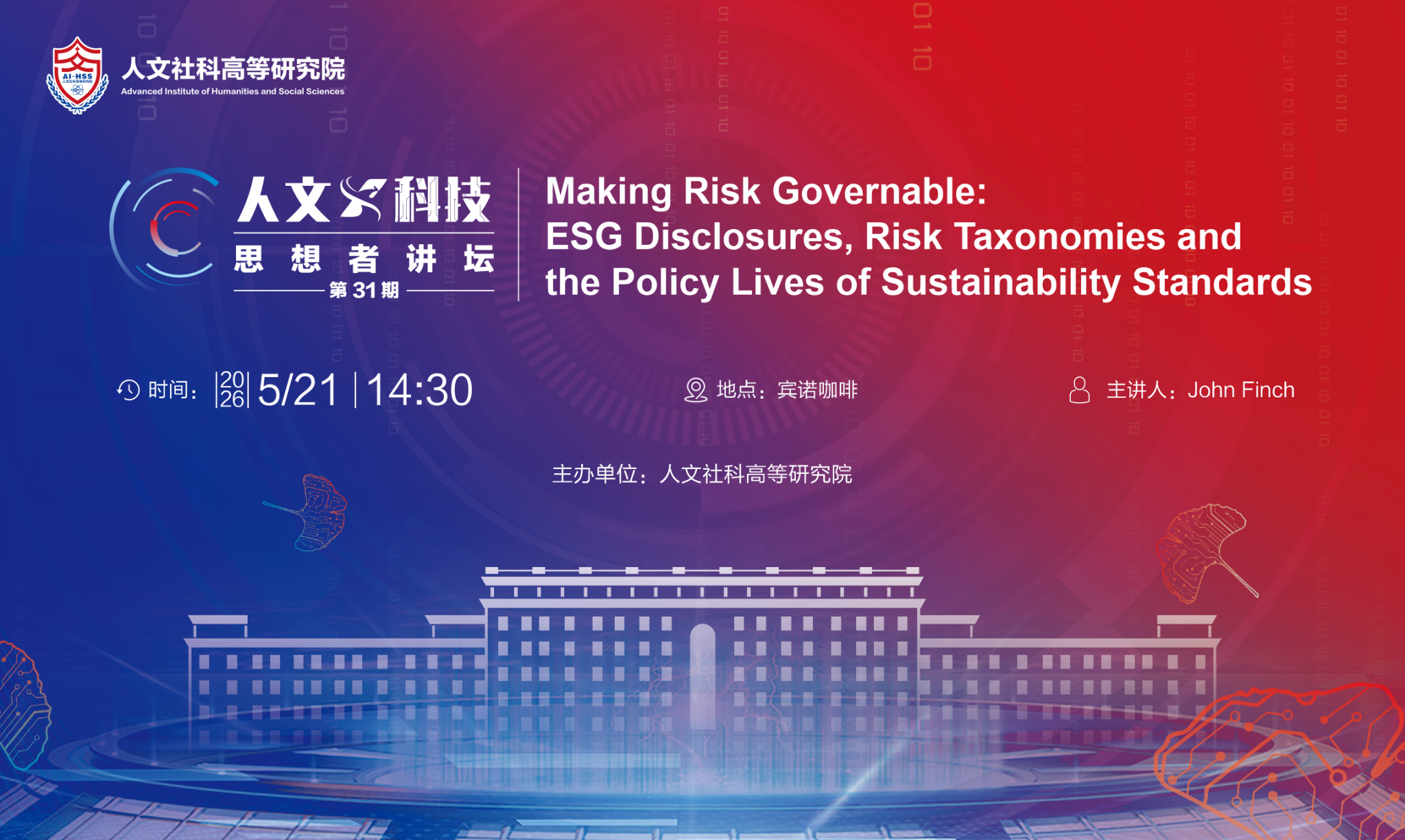
Time: May 21, 2026 (Thu), 14:30
Location: Coffee Beanery
Organizer:
Advanced Institute of Humanities and Social Sciences (AI-HSS)
Sign-up QR Code: