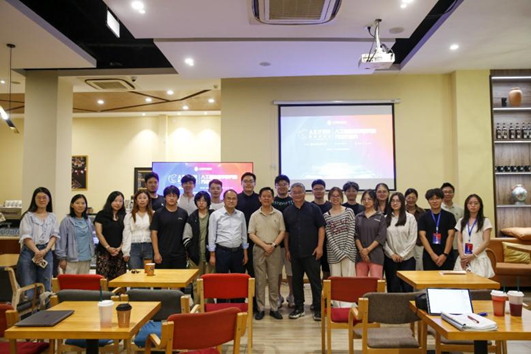
On September 25, AI-HSS of UESTC hosted the 14th "Humanities × Technology" Thinkers’ Forum. This forum, themed "Methodological Exploration in the Philosophy of Artificial Intelligence", featured Professor Jiang Yi from Shanxi University as the keynote speaker. Professor Zeng Yong, Dean of Advanced Institute of Humanities and Social Sciences (AI-HSS), attended the event, with Professor Wan Xiaolong serving as moderator.
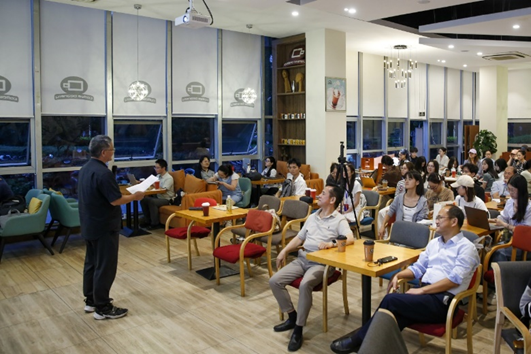
At the outset, Professor Wan Xiaolong extended a warm welcome and sincere gratitude to Professor Jiang for returning to UESTC for exchanges, and briefly introduced his research experience and outstanding achievements. Professor Jiang is a recipient of the Ministry of Education's National Talent Program, serves as Chair of the Chinese Society for Modern Foreign Philosophy, and is the Chief Expert for the National Social Science Fund Major Project "Research on the History of 20th-Century Chinese Analytic Philosophy."
In his lecture, Prof. Jiang offered profound reflections on the development of artificial intelligence from a philosophical perspective. He pointed out that AI technology has far surpassed the realm of tools, becoming an integral part of human life and potentially evolving into an independent form of intelligence. Contemporary philosophical research on AI must undergo three major shifts: rethinking the nature of intelligence, adopting an engineering philosophy paradigm shift in research approaches, and exploring new paths in experimental philosophy. Jiang contends that artificial intelligence represents a novel form of intelligence, not merely an extension of human cognition. We must shift from "evaluating AI through the lens of human intelligence" to "reflecting on human intelligence through the lens of AI," a paradigm shift of profound significance for understanding humanity itself.
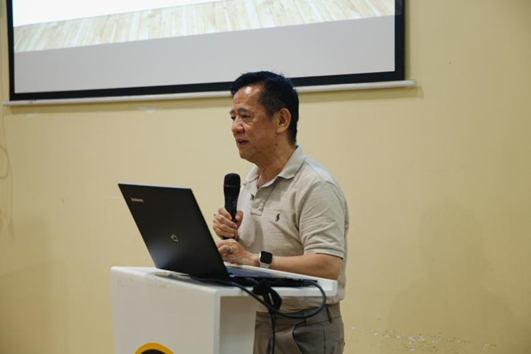
Additionally, Prof. Jiang put forward the unique perspective that "artificial intelligence is discovered rather than invented", arguing that its characteristics are inherently latent within human intelligence. While remaining cautious in theory regarding the potential ethical and societal challenges posed by AI, he expressed optimism about its practical development, emphasizing the need for institutional norms to address future risks.
During the Q & A session, faculty and students engaged in discussions around issues such as the relationship between philosophy and science, ethical governance of artificial intelligence, and technological development pathways. Jiang emphasized that philosophy should form an alliance with science to jointly address new challenges arising from technological advancement.

This lecture established a platform for interdisciplinary communication, offering philosophical perspectives on artificial intelligence that provide crucial intellectual resources for future technological development.