On November 6th, AI-HSS hosted the 17th "Humanities × Technology" Thinkers’ Forum. As one of the first anniversary celebration activities of AI-HSS, this forum, themed "Mutual Empowerment of the Human Brain and the Machine Brain: The Power of Language, Cognition and Intelligence", featured Professor Guillaume Thierry—an internationally renowned cognitive neuroscientist from the School of Psychology at Bangor University in the UK and a recipient of the Polish Academic Exchange Fund—as the keynote speaker. Professor Hu Jiehui, Dean of the School of Foreign Languages, hosted this event.
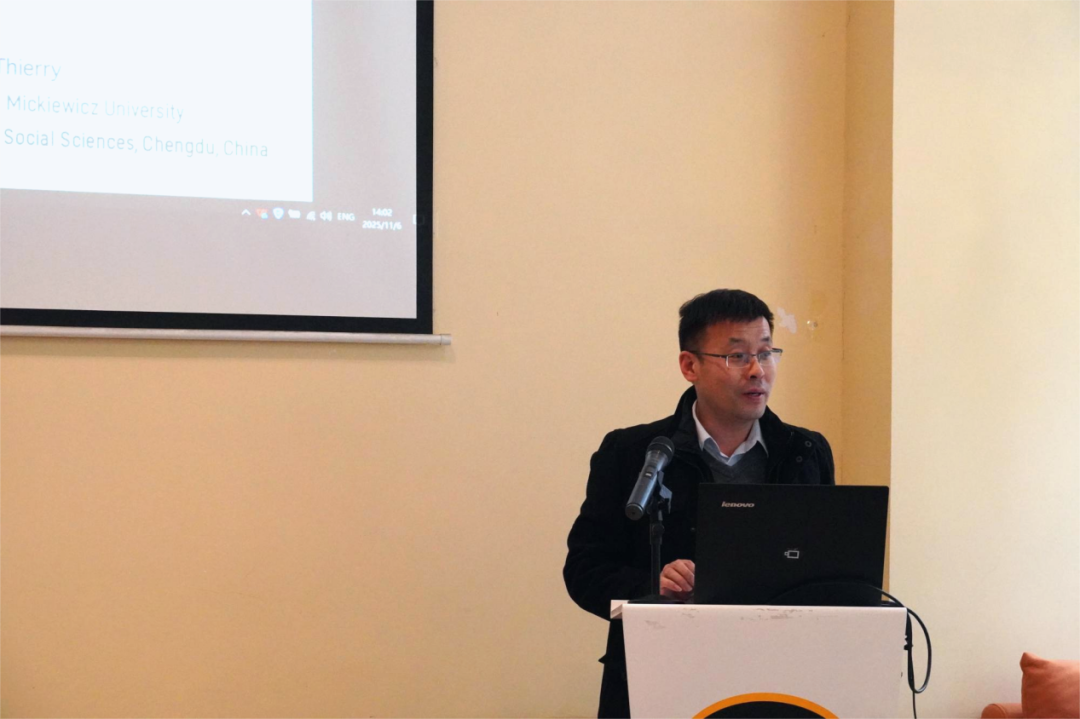
At the beginning of the forum, Hu extended a warm welcome to Professor Thierry and briefly introduced his international influence and cutting-edge achievements in the fields of human brain meaning processing, multimodal interaction between language and cognition.
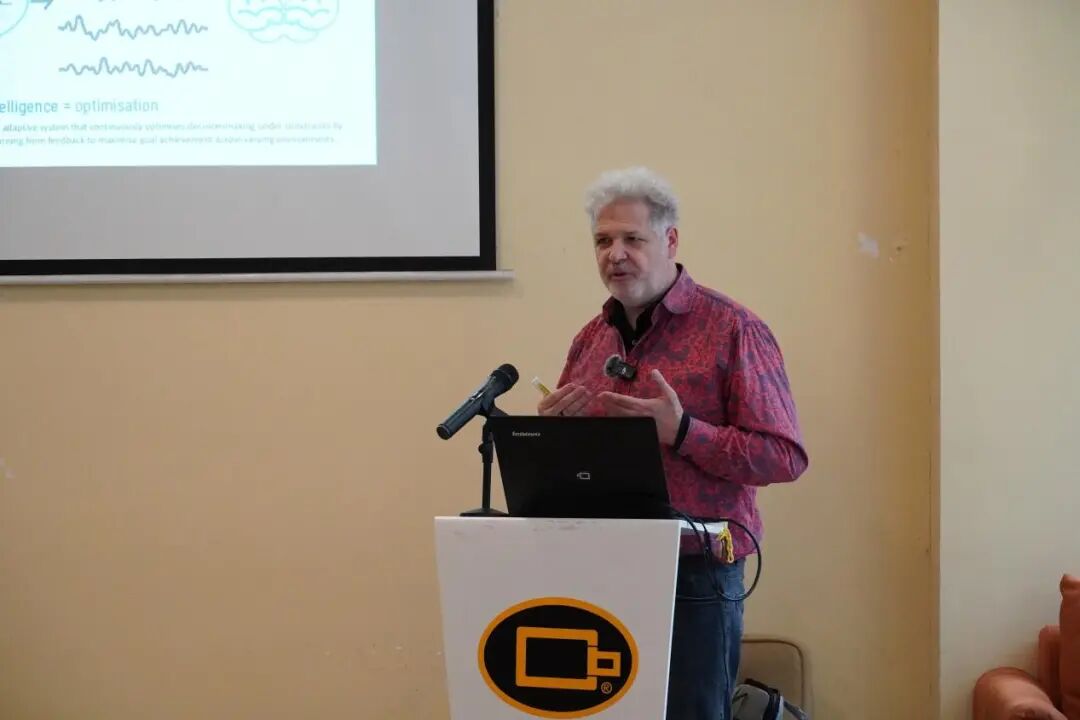
In the lecture, Professor Thierry systematically expounded on how the human brain processes language as a "structured signal", and pointed out that the prediction, calculation and optimization mechanisms behind it are being borrowed by modern artificial intelligence technology. He demonstrated the emergent processes of meaning, emotion and multilingual activation on a millisecond time scale through neuroimaging data such as electroencephalogram (EEG) and event-related potential (ERP), emphasizing that language understanding is a highly dynamic cognitive activity that mostly occurs outside of consciousness.
Subsequently, Professor Thierry further linked the mechanisms of the human brain with principles in engineering such as signal processing, error minimization, and adaptive learning, revealing their inspiring effects on artificial intelligence models like Transformer and predictive coding. The application potential and related risks of these mechanisms in fields such as brain-computer interfaces, emotion-adaptive AI, and explainable machine learning were also explored.
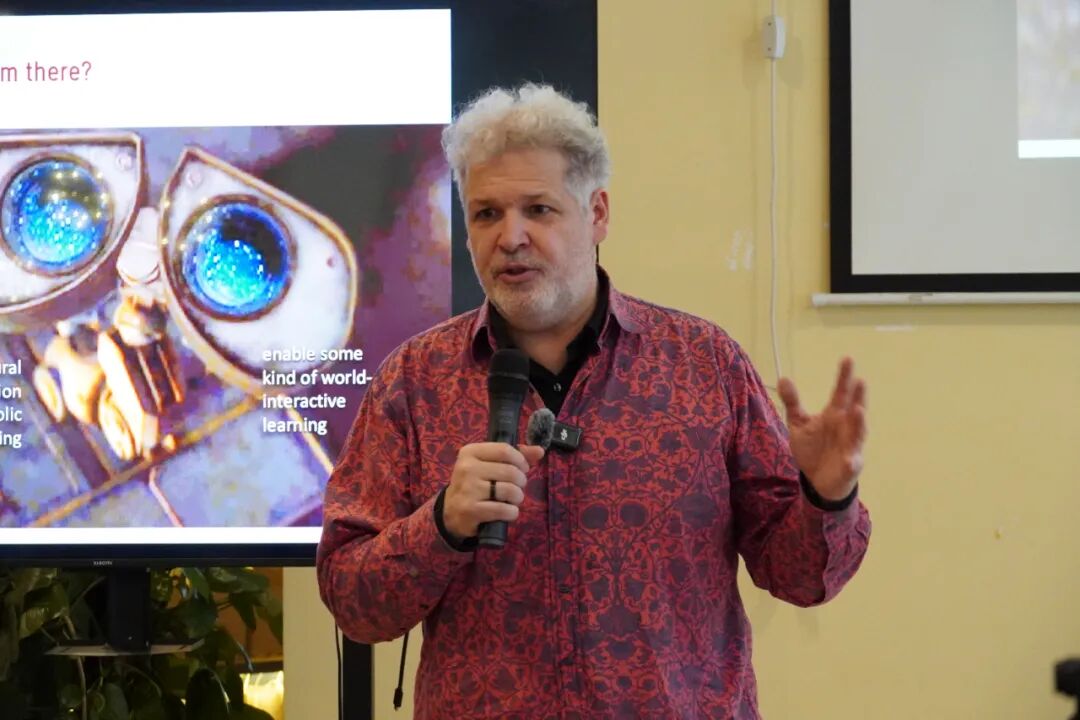
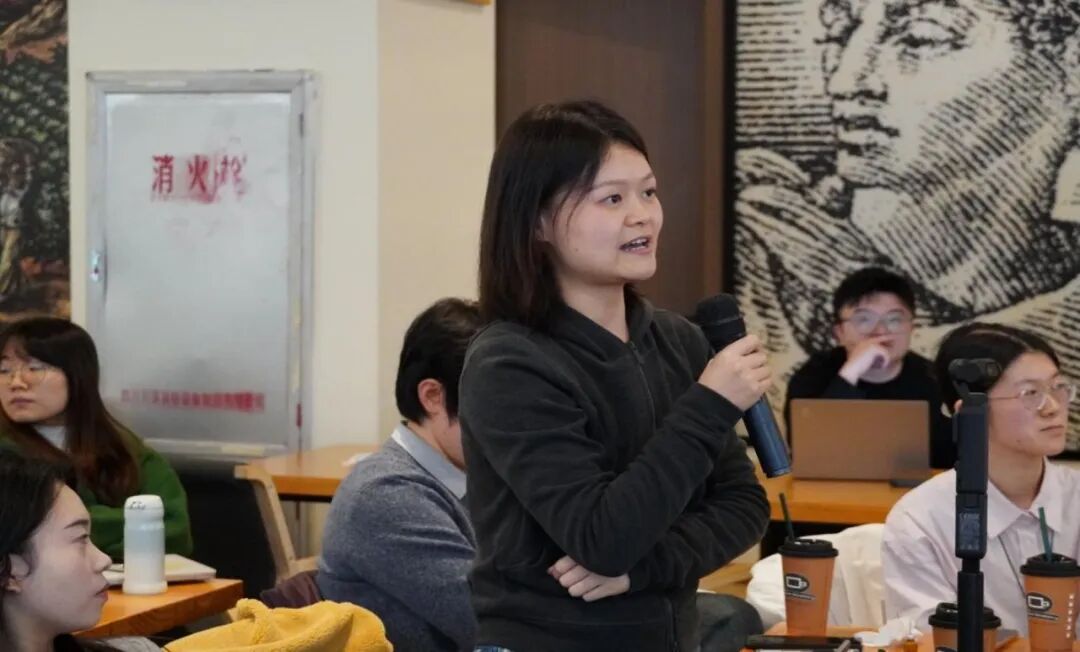
During the Q&A and interaction session, teachers and students on the spot engaged in in-depth exchanges with Professor Thierry on topics such as the fundamental goals of artificial intelligence development, technical limitations, and ethical risks. The teachers and students present asked whether the current research on artificial intelligence, in the process of imitating human intelligence, could truly promote the progress of scientific cognition. Professor Thierry responded that although artificial intelligence still faces fundamental challenges in fully replicating human intelligence, it is expected that enhanced systems with symbolic reasoning capabilities will be developed in the future, thereby providing breakthrough solutions to complex social problems. At the same time, he also cautioned that there is a certain degree of overheating in the current expectations for general artificial intelligence, and it is necessary to view it rationally.
This lecture provided a valuable opportunity for Chinese and foreign teachers and students to engage in dialogue with the top international scholar, effectively promoting the integration and innovation of interdisciplinary perspectives, and injecting new impetus into the cross-disciplinary research of language cognition, artificial intelligence and educational practice.