On December 22nd, AI-HSS held the 23rd “Humanities × Technology” Thinkers Forum. This lecture, themed “Ethical Risks and Governance in the Development of Brain Science Technology,” featured Professor Sun Chunchen, a member of the National Science and Technology Ethics Committee, President of the Chinese Ethics Society, researcher at the Institute of Philosophy of the Chinese Academy of Social Sciences, and Distinguished Xiaoxiang Scholar Professor at Hunan Normal University, as the keynote speaker. Professor Lei Ruipeng, Vice Dean of AI-HSS, served as the host. Professor Lei extended a warm welcome and expressed her gratitude to Professor Sun for his presence. She introduced Professor Sun as a scholar who has long been dedicated to the fields of ethical principles and applied ethics, with a wealth of academic achievements and significant influence, particularly in researching cutting-edge issues in science and technology ethics. His representative works, such as Research on Market Economy Ethics, On Life and Death, New Perspectives on Ethics, and On the Happiness of Life, have resonated widely in academia. Among them, New Perspectives on Ethics received the Outstanding Research Achievement Award from the Chinese Academy of Social Sciences, and On the Happiness of Life was honored with the National “Five One Project” Award, reflecting Professor Sun’s profound academic expertise and outstanding contributions.
During the lecture, Professor Sun began by addressing the fundamental differences in risk perception between scientists and ethicists, systematically analyzing the profound ethical challenges posed by cutting-edge brain science technologies. He elaborated on the principles of neuromodulation technology and brain-computer interface technology, with a focus on analyzing their potential uncertainties and risks, including the possible erosion of personal autonomy, personal identity, and mental privacy, as well as the long-term impact on the natural development of children and adolescents.
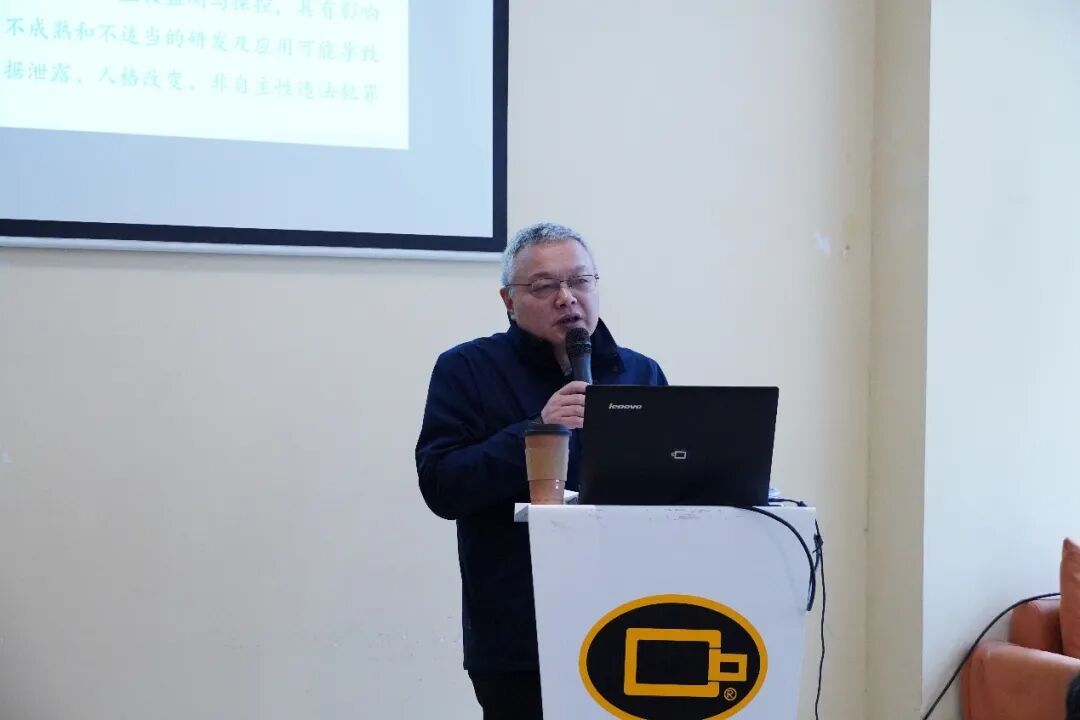
Subsequently, Professor Sun shifted his focus to the governance framework and practical pathways for brain science ethics. He outlined the efforts made by international organizations and major countries in establishing ethical guidelines for neurotechnology and objectively analyzed the existing governance systems and practical challenges in this field in China. He particularly noted that current ethical guidelines remain at a high level of abstraction and require greater operational specificity. Based on this, he proposed several forward-looking recommendations: promoting the concretization and categorized management of ethical review mechanisms, advocating for the simultaneous establishment of ethics expert groups in major national brain science initiatives, and emphasizing the need to integrate a Chinese cultural perspective while actively participating in global governance. This approach aims to build an ethical governance system that embodies both international consensus and Chinese characteristics, guiding technology toward beneficial development.
During the Q&A session, faculty and students engaged in in-depth discussions with Professor Sun on topics such as the application risks of brain science technology and the practical challenges of ethical governance. Drawing from his practical observations as a member of the National Science and Technology Ethics Committee, Professor Sun addressed the concerns raised by the attendees one by one. He particularly emphasized the necessity of maintaining ethical vigilance amid rapid technological advancements, noting that scientists should proactively cultivate a sense of responsibility, while ethical governance must move toward greater refinement and contextualization. He also called for the active integration of value considerations rooted in Chinese culture in interdisciplinary collaboration and international dialogue.
This lecture closely centered on the ethical risks of cutting-edge brain science technologies, starting with an analysis of specific technical principles and gradually extending to reflections on constructing governance frameworks. Drawing from his firsthand experience in national science and technology ethics governance, Professor Sun not only clearly outlined the challenges to autonomy, privacy, and fairness posed by technologies such as neuromodulation and brain-computer interfaces but also shared genuine insights and dilemmas encountered in international and domestic ethical consultations and rule-making processes.