On December 29th, AI-HSS hosted the 24th “Humanities × Technology” Thinkers’ Forum. The forum, themed “The Responsible Path Forward: Ethics and Regulation in Genomic Innovation” featured Dr. Du Li, Associate Professor at the Faculty of Law, University of Macau, Director of the Empirical Legal Studies Centre, and Director of the Juris Doctor Program, as the keynote speaker. Professor Wan Xiaolong served as the host.
Professor Wan extended a warm welcome to Professor Du and introduced his outstanding achievements in the interdisciplinary field of biotechnology law and policy. During the lecture, Professor Du systematically outlined the revolutionary breakthroughs in genomic technology, from the Human Genome Project to CRISPR gene editing, as well as its wide-ranging applications in fields such as healthcare and agriculture. He delved into the core controversies arising from technological advancement, covering issues such as the ownership of biological samples and privacy protection, the right to autonomous decision-making in genetic testing, the responsibility of disclosing genetic information to family members, and the practical challenges of legal frameworks lagging behind technological development. He emphasized that the integration of generative artificial intelligence with genomics, while enhancing research and development capabilities, also introduces new problems such as data privacy, algorithmic bias, and regulatory gaps. To promote responsible innovation, Professor Du proposed establishing an evidence-based governance framework, leveraging ethical principles for guidance, and creating a multi-stakeholder participation mechanism.
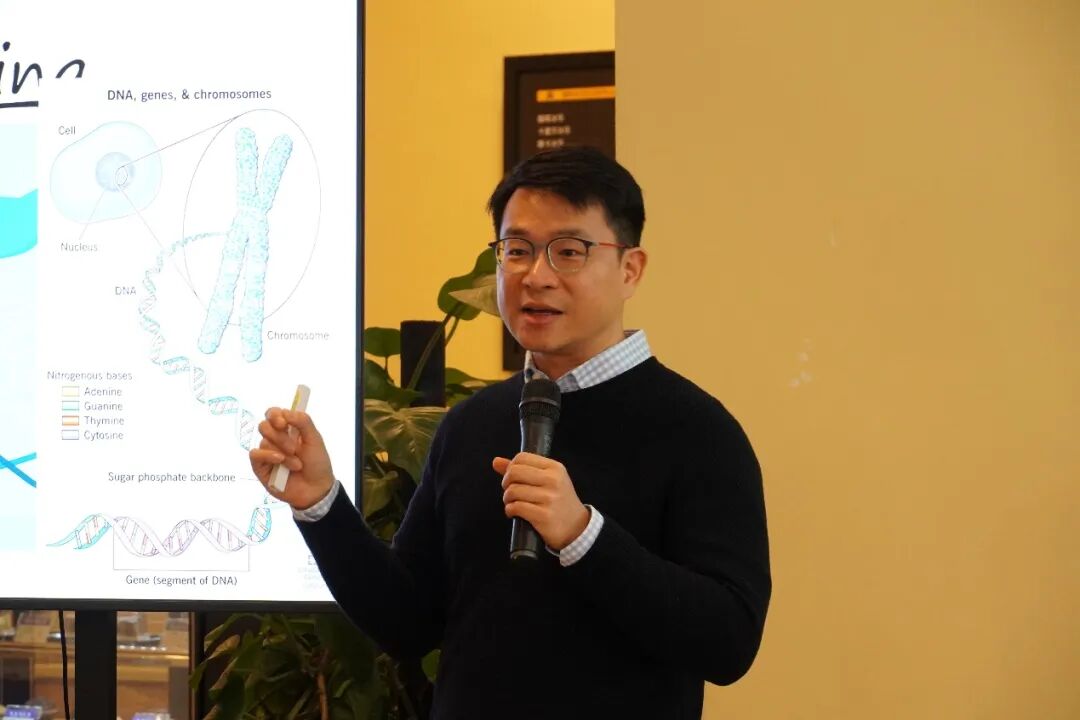
During the Q&A session, students actively raised questions on topics such as the “commons tragedy” dilemma concerning intellectual property and benefit-sharing of genomic data, as well as the protection of data providers’ rights. Professor Du Li provided detailed and in-depth responses from both legal and ethical perspectives, drawing on practices from China and abroad, creating a lively and engaging atmosphere for discussion.
This forum not only provided a platform for faculty and students to engage in in-depth dialogue with a leading scholar at the forefront of the field but also vividly demonstrated the intellectual vitality generated by the intersection of humanities and technology. It offered valuable academic practice for promoting interdisciplinary research and cultivating versatile talents for the new era.