On January 9, 2026, AI-HSS hosted the 26th “Humanities × Technology” Thinkers’ Forum. The forum, themed on “Intelligence, Situation Awareness, and Context Sensitive Choice: From Brain Plasticity to Consciousness to Incentive”, invited Professor Chew Soo Hong, Director of the Center for Intelligent Economic Science at Southwestern University of Finance and Economics, Chair Professor in the Department of Economics at the National University of Singapore, Fellow of the Econometric Society, and Fellow of the Society for the Advancement of Economic Theory (SAET), as the keynote speaker. The event was moderated by Associate Professor Hao Dong from AI-HSS and the School of Computer Science at the University of Electronic Science and Technology of China.
During the lecture, Professor Chew systematically elucidated the core issues of human intelligence and artificial intelligence. He began by clarifying the fundamental distinctions between human intelligence and AI, noting that human wisdom transcends mere capability, encompassing deeper dimensions such as beliefs and intuition. In the intersection of language and cognition, he focused on the conceptual and theoretical debates surrounding “consciousness” and “awareness,” proposing that “awareness” more closely aligns with the semantic essence of the term and clarifying their distinct references in academic contexts.
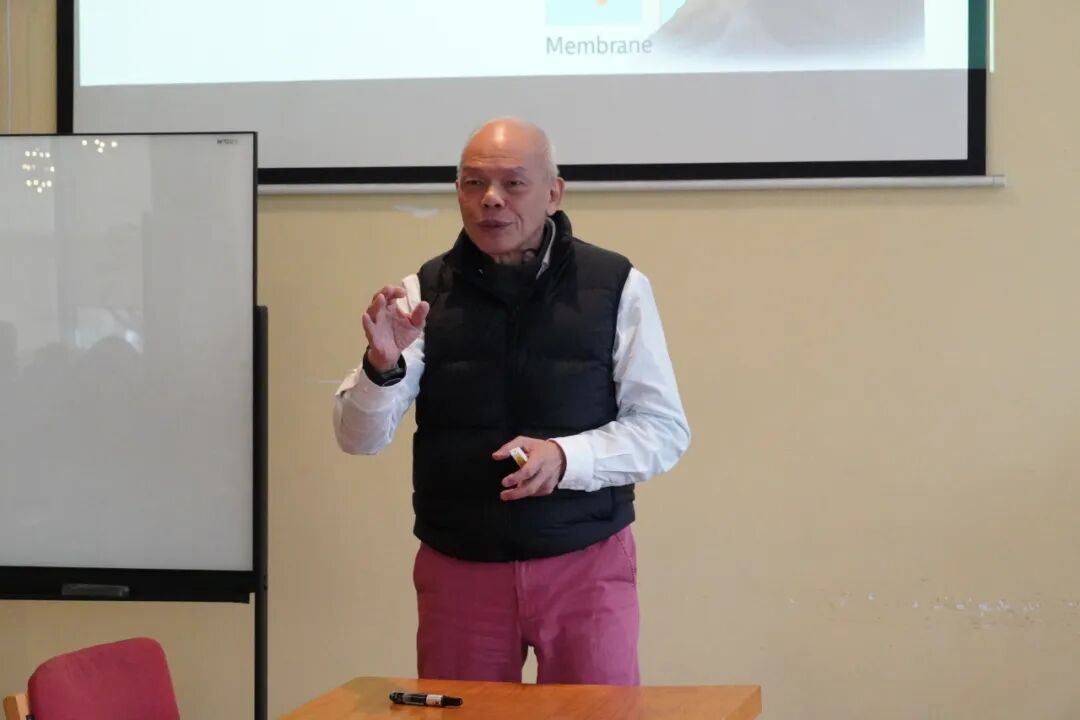
Regarding the physiological foundations of human intelligence, Professor Chew provided an in-depth analysis of the dual functions of neural plasticity: serving as the core mechanism for memory formation by strengthening synaptic connections through the co-activation of neurons to store information, and also enabling environmental prediction, thereby assisting the brain in efficiently allocating energy. He further supported this with data, noting that although the human brain constitutes only 2% of body mass, it consumes 20% of resting energy. Sparse coding and hierarchical attention strategies are key to balancing the brain’s high energy consumption with high efficiency. Subsequently, Professor Chew contrasted the essential differences between human intelligence and AI: artificial intelligence lacks subjective experience and consciousness, with its operational “incentive” derived from preset loss or objective functions, and its decisions relying on fixed algorithms and data inputs. In contrast, human intelligence, through the dynamic adjustments of neural plasticity and flexible adaptation of situational awareness, possesses creativity and adaptability that AI cannot replicate. He emphasized that the core distinction lies not in the strength of capabilities but in the contextual and value-driven nature of wisdom generation.
During the Q&A session, faculty and students actively raised questions on topics such as “whether AI can replicate neural plasticity mechanisms,” “the application of loss aversion theory in AI decision optimization,” and “cross-cultural interpretative differences in consciousness and awareness.” Professor Chew, drawing on cutting-edge research and practical cases from both domestic and international contexts, provided detailed and insightful answers from multidisciplinary perspectives, fostering a lively and engaging atmosphere.
This interdisciplinary seminar established an academic dialogue platform bridging the humanities, social sciences, and technology. It systematically demonstrated the cross-disciplinary value of research on human intelligence and artificial intelligence while offering faculty and students an opportunity to engage with cutting-edge theories and intersectional thinking. The forum holds significant academic and practical importance for promoting interdisciplinary research innovation and cultivating versatile talents.